


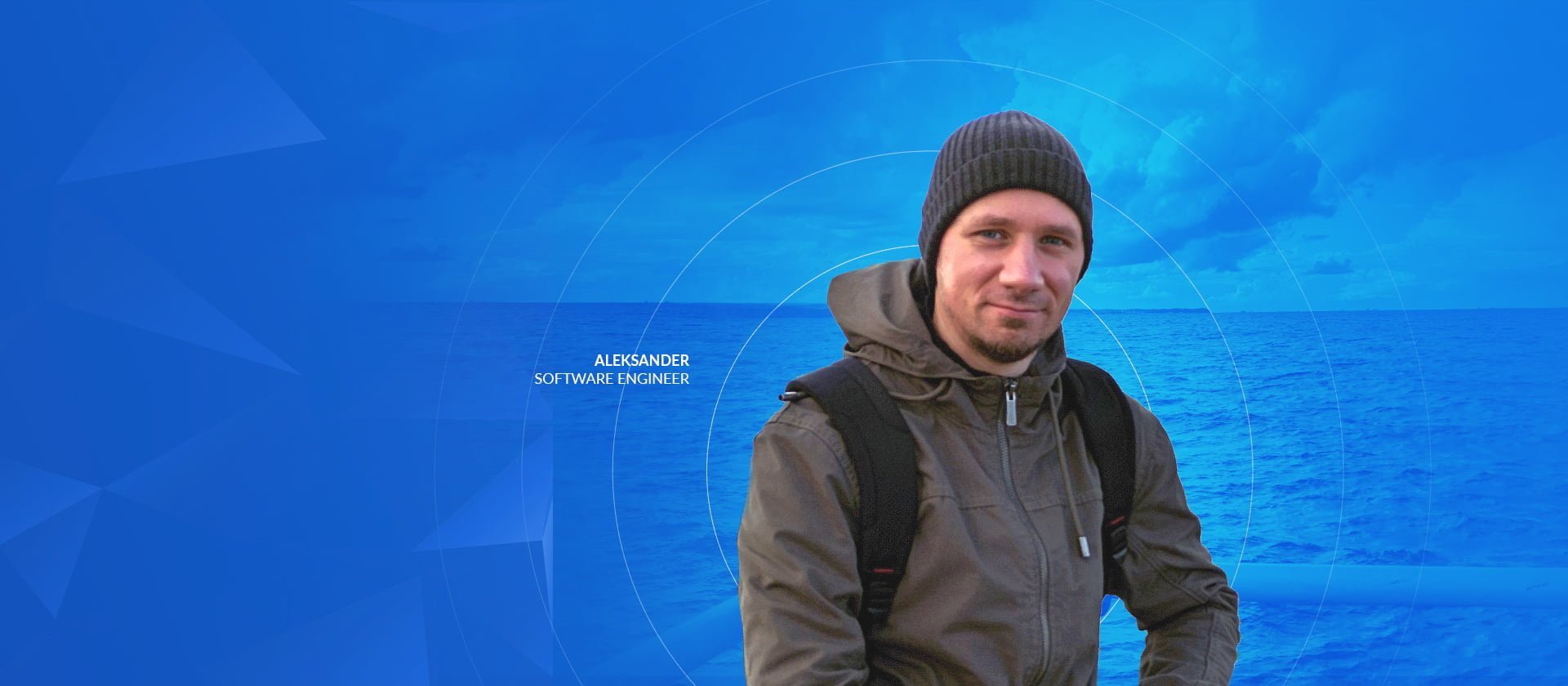
Sii Balloon conquered the stratosphere! Meet Aleksander, whose inspiring project was funded by Passion Sponsorship Program
For engineers from Sii “sky is not the limit anymore”! Aleks, a Software Engineer from the Embedded Competence Center, came up with the idea to conduct an unusual experiment with the help of the Passion Sponsorship Program. He came up with the idea, designed and built a special cargo box attached to a balloon, which he released into the sky. Aleksander tells us more about the idea, which ended in a grand finale and full success in July.
The Passion Sponsorship Program aims to support our employees in developing their passions, including sports, cultural projects, and technology. The idea of sending a balloon into space with a specialized cargo was realized for the first time ever.
Don’t overdo it with space! It is extremely difficult to reach space by balloon because there is no air out there. The proposal concerned the design, construction, and launch of a stratospheric balloon with a load that contained various sensors, shortwave transmitters, and a camera. And it worked –thanks to the grant from the Program. For more than 2 months I was working out the details and in July the balloon flew to an altitude of over 24,000 m.
How do you know it was so high?
The balloon was tracked from the ground by radio communication. It was equipped with a GPS receiver, thermometers, and a pressure sensor, and it also had a built-in camera that recorded the entire flight from launch to the moment the balloon burst and the beginning of its fall. Thanks to all these sensors, we were able to find it after landing, and we also know that it rose to over 24 km, and at the coldest moment of flight, the thermometer indicated -55 °C.
How did you prepare for that day?
First of all, I had to construct a mechanical part (physical part), which consisted of the balloon itself, which allowed the load to fly, and a parachute so that it could fall safely after the burst. Plus a whole box of cargo, various ropes, and heaters. The second part of the project is technology: embedded application, all microcontrollers, radio transmitters and receivers, sensors, and power supply elements. All this had to be selected, purchased, and put into one system. Thirdly, also purely organizational matters related to safety: the flight was reported to the Air Navigation Agency and we received consent for it.
Were there other people involved in the project?
I worked with my 9-year-old daughter to assemble the load and write embedded apps, which helped me a lot. We worked on radio communication together with Piotr Parfeniuk, an engineer from the same Competence Center, whom I met during this project. Privately, Piotr is interested in radio systems; the balloon was transmitting signals under his radio symbol. He also supported me in the process of tracking the balloon: he constantly controlled the signal and informed me about its status, thanks to which it was possible to quickly identify a potential landing place.
The release of the balloon gathered a small crowd of colleagues from Sii, their families, and some other spectators. Such an event is a great treat for both adults and children! Some actively helped in filling the balloon with helium and folding the load and the parachute into one working structure, which had to be done already on the spot, before the flight. Thanks to the joint action, the release of the Sii balloon was a success.
What was the biggest challenge for you in the project?
The biggest challenge was to become familiar with the new technologies and to create an effective system based on them. For me, radio systems (LoRa, RTTY) in embedded systems were a complete novelty. I deal with drones as a hobby, but balloons were a completely new thing for me, full of mysteries and curiosities. Technology was definitely the most difficult part of this project! This aspect met my expectations because I wanted to implement this project to learn new technologies, to use them in a specific and unusual setting, which would be an extraordinary curiosity for me and other technology fans. And I think it worked: flying to such an altitude and seeing down from there is impressive! And of course, we have a lot of spectacular pictures from outer space, but this view is unique; it comes from the camera that I put in the box myself and personally made an effort to get it there!
Congratulations on your success! Did you draw any conclusions and have any new ideas?
It was a very interesting project that combined different technologies. It could have been more elaborate: I could have added more sensors and GSM connected to the cloud from the ground station, but I ran out of time. That is why I am planning the “Sii to the sky 2” project – I would like for it not to be one big balloon, but a few smaller ones. I want balloons powered by photovoltaics to fly all over Europe!
You mention technology and embedded systems. Are your passions connected with your professional life?
In Sii, I work as a C-embedded programmer. I am currently working on a solution for sensors built in silicon. The design with the balloon was most “embedded-like”, based on ESP32 and RP4020 microcontrollers, used I2C, UART, and 1-Wire interfaces and 2 types of radio communication: RTTY and LoRa. No knowledge ever goes to waste! These experiences will certainly pay off in the future, besides, they undoubtedly stimulate creativity, thinking, planning, and teaching organizational skills. And they allow for gaining new knowledge and skills as in my case – the radio systems.
If you want to pursue your passions and develop thanks to the support of Sii, take a look at our job offers, join the team, and participate in the Passion Sponsorship Program!


